Your AI Workforce
Is Ready
The knowledge platform that powers every AI agent — yours or ours.
Trusted by industry leaders
The right knowledge, at the right time.
ProdMap supplies every AI agent with the context it needs — and ships with built-in agents to get you started.
Make Yours Smarter
Already using Cursor, Claude Code, Devin, or Windsurf? ProdMap hooks into any agentic workflow via MCP — supplying your knowledge base, architecture decisions, and constraints so they build the right thing the first time.
Use Our Agents
ProdMap also ships with built-in agents that handle research, planning, prototyping, compliance, and more — all powered by your knowledge base so they always have the right context.
How It Works
ProdMap turns scattered organizational knowledge into structured context that any AI agent can use.
Connect Your Knowledge
Upload documents, sync repositories, import policies. ProdMap structures everything into a queryable knowledge base that stays current as your product evolves.
Agents Get Context
Built-in agents and third-party tools query the knowledge base at runtime via MCP. Every agent — Cursor, Claude, Devin, or your own — gets the right context for the task at hand.
Ship with Confidence
Every output is grounded in your architecture, constraints, and requirements. No hallucinations. No context gaps. No reinventing what your team already decided.
What goes into your knowledge base
Every type of institutional knowledge, structured for agents.
Latest from the Blog
Practical insights on AI agents, context engineering, and product delivery.
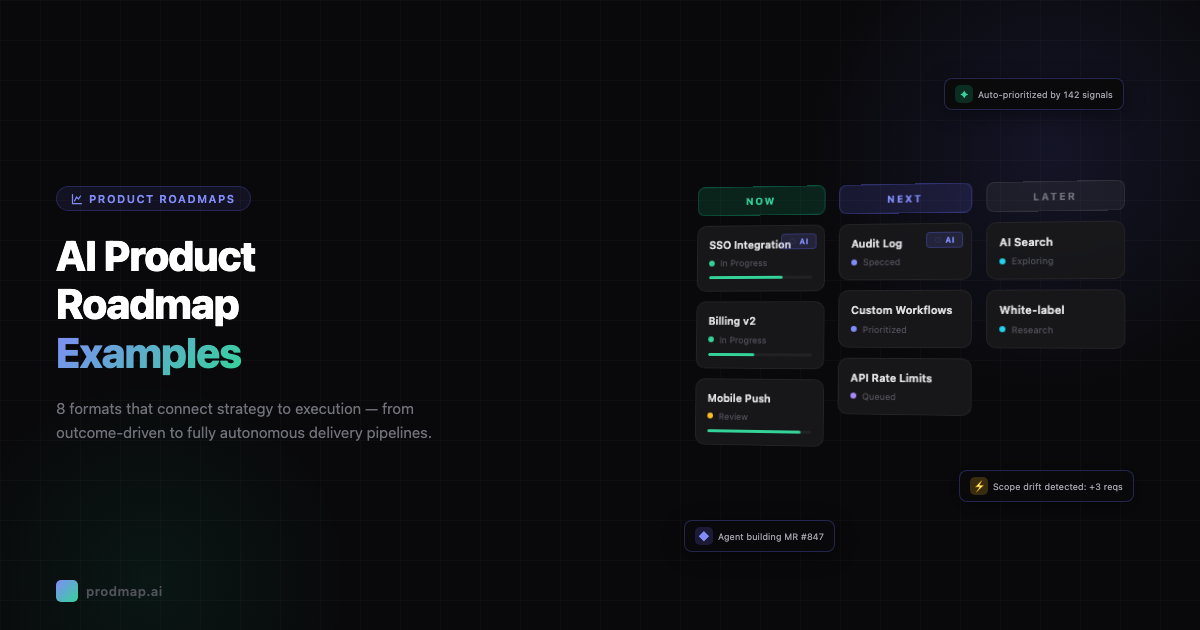
8 AI Product Roadmap Examples That Actually Ship Features
8 AI product roadmap examples that connect strategy to execution. Includes templates for outcome-driven, Now-Next-Later, and continuous delivery formats.
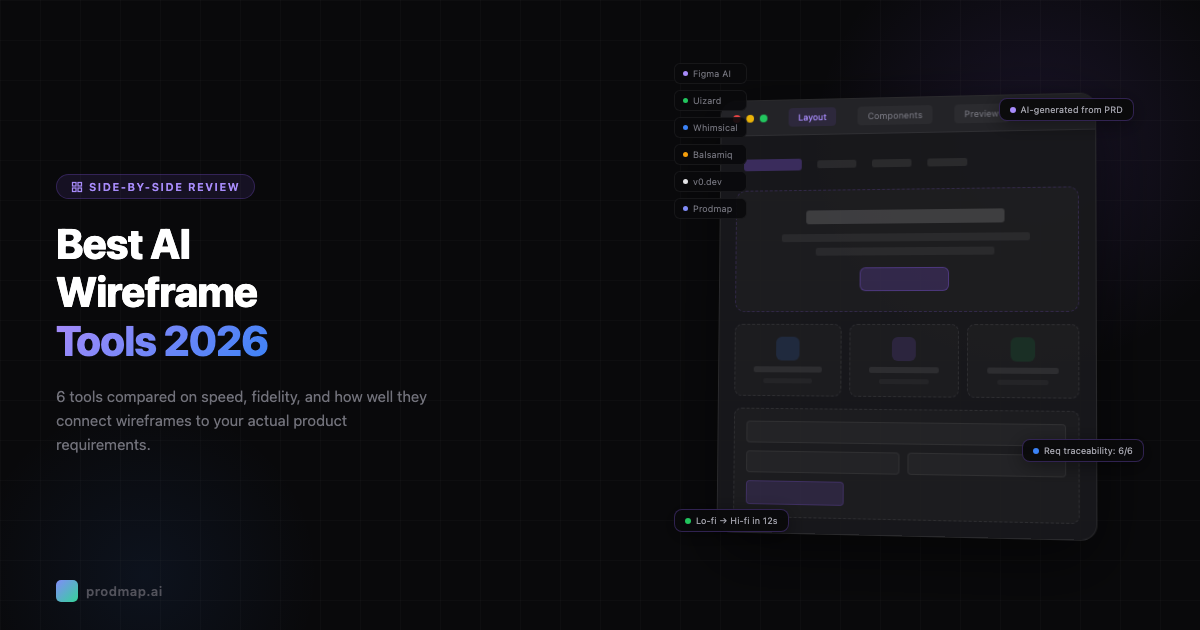
Best AI Wireframe Tools in 2026 (Side-by-Side Review)
We compared 6 AI wireframe generators on speed, fidelity, and collaboration features. Here's which ones actually save time — and which ones create more work.
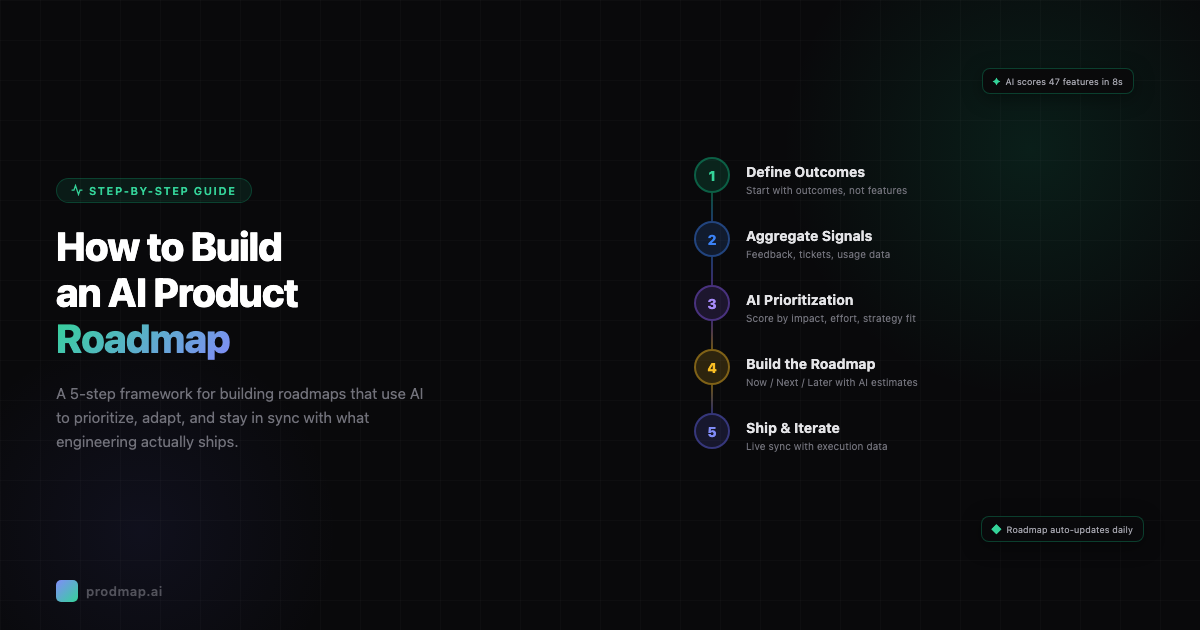
How to Build an AI Product Roadmap (Step-by-Step Guide)
A 5-step framework for building an AI product roadmap — from defining outcomes to agent-driven execution that updates itself daily.
Frequently Asked Questions
Everything you need to know about your AI workforce.